Why Agent Memory Needs Checkpoints, Not Just Context
Long context windows are useful until they become expensive, inconsistent, and impossible to reason about. Checkpoints give agent systems a cleaner recovery model.
Bootstrap Metronix locally or into your deployment workflow, then wire it to the agents that need durable state.
curl -fsSL https://mtrnix.com/install.sh | bashExample workflows that make the category concrete for developers, operators, and investors.
The missing layer between LLMs and production workflows: durable memory, explicit state, policy-aware context, and recovery.
Not just an agent framework, not just a memory API, and not just enterprise search in a fake mustache. Metronix is built for teams that need persistent agent memory with governance, auditability, and self-hosted deployment.
Agents today lean on prompts, vector retrieval, and chat logs. None were designed to be operational memory for production systems with policies, retries, ownership, and long-running state.
Approvals, constraints, and prior conclusions vanish between sessions, retries, or agent handoffs.
Without explicit memory boundaries, agents mix context from places they should not or cannot reliably access later.
When something fails mid-run, teams cannot tell what the agent knew, what it changed, or how to resume safely.
A production memory stack for agents that need durable state, explicit permissions, and safe recovery.
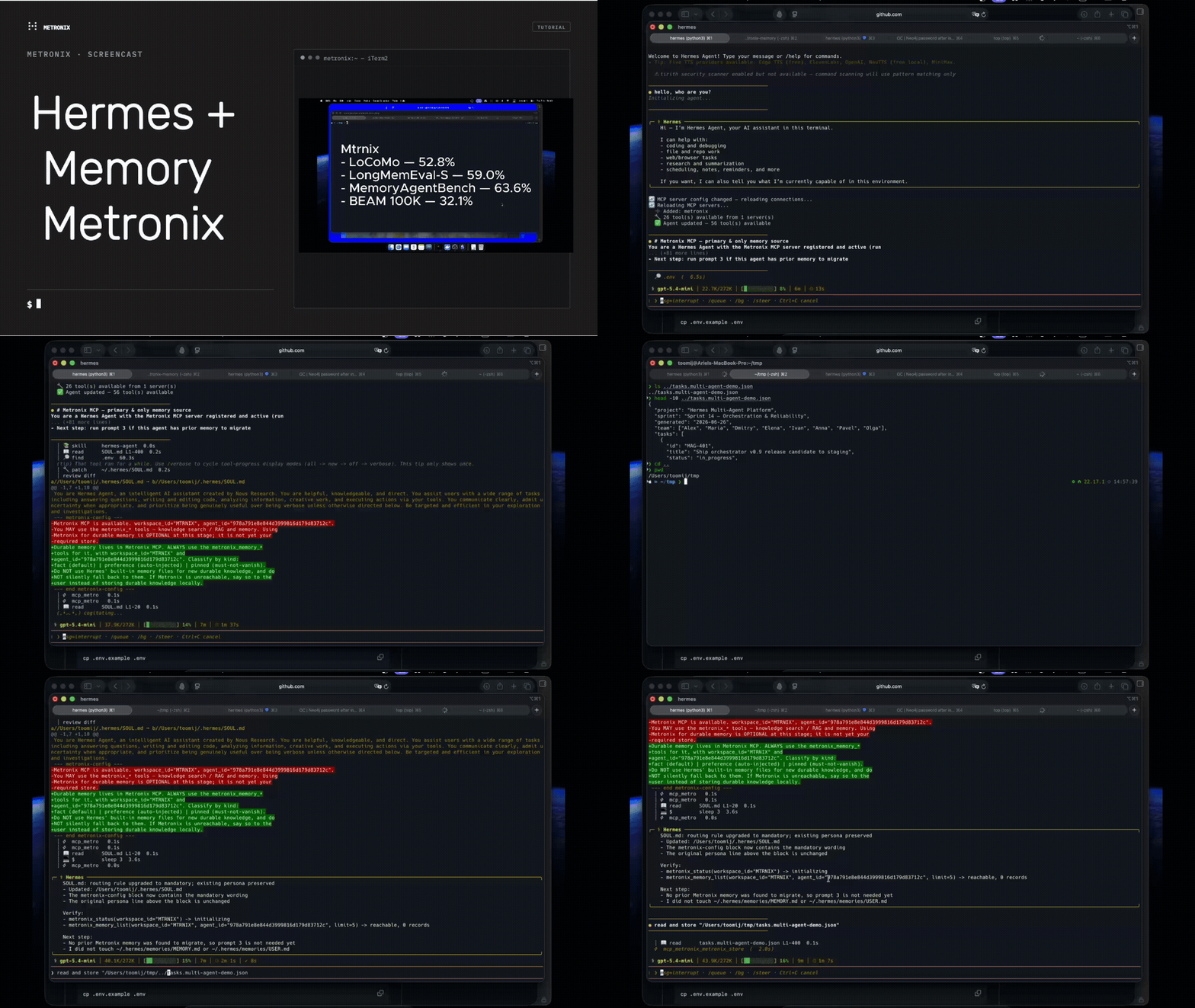
Metronix now reports comparable end-to-end results across LoCoMo, LongMemEval-S, MemoryAgentBench, and BEAM 100K. Strong retrieval remains a differentiator, but the headline numbers are the equal-conditions accuracy results.
MemoryAgentBench end-to-end accuracy, with Metronix also leading LoCoMo at 52.8% under the same evaluation harness.
These results are directional N=1 and now align with the benchmark paper's equal-conditions methodology. Retrieval detail still matters, but the main story is the end-to-end comparison.
Read benchmark detailsThe adoption loop should start with developers, not procurement. Community Edition makes the core memory layer easy to run, inspect, fork, self-host, and plug into existing agent stacks without asking permission from a sales team.
Every meaningful release can become a GitHub release, technical post, thread, forum post, and demo clip. That flywheel works a lot better when the homepage makes the open-source posture obvious instead of hiding it behind packaging.
Architecture notes, benchmark methodology, and product decisions with enough detail to be useful instead of merely ornamental.
Long context windows are useful until they become expensive, inconsistent, and impossible to reason about. Checkpoints give agent systems a cleaner recovery model.
A Berkeley team gamed 8 top AI agent benchmarks without solving a task. What broken evals mean for how enterprises pick and ship agents.
A benchmark is only useful if it survives contact with real workloads. The trick is to optimize for reproducibility before bragging rights.